NATIVE WOODLAND
WHAT IS NATIVE WOODLAND?

Native Woodland
The Forestry Commission defines native woodland as consisting mainly of native trees, that is those that have grown here naturally since the last Ice Age and have not been introduced by humans.
This is based on the fact that modern humans only fully colonised the British Isles after the last ice retreated about 12,000 years ago.
An Island Nation
At about the same time the ‘land-bridge‘ connecting us to the continent was inundated and we became an island, limiting the effect of woodland and forest changes occurring across the channel. Any new tree species would have to arrive via humans.
The forests of the time were made up of many familiar trees – oak, birch, willows, ash, alder, elm, Scots pine etc. But there are some surprising species that were not part of that ancient woodland – horse chestnut, larch, and sycamore. Even the beech may have been introduced by man.
OUR NATIVE WOODLAND TREES
Please see below for a full list of the native woodland tree species we grow, sell and plant out across Dartmoor and South Devon.

Common Alder
Also called: alder, black alder, European alder, European black alder
Scientific name: Alnus glutinosa
Estimate full grown height: up to 30 metres (98 ft)
Preferred habitat: forest edges, riverside corridors, wetlands

Silver/Downy Birch
Also called: East Asian white birch, European white birch, warty birch (silver) | hairy birch, moor birch, white birch (downy)
Scientific name: Betula pendula (silver) | Betula pubescens (downy)
Estimate full grown height: up to 30 metres (66 ft)
Preferred habitat: heathland, moorland, mountainsides (silver) | heathland, moorland, mountainsides, peat bogs (downy)

European Hornbeam
Also called: common hornbeam
Scientific name: Carpinus betulus
Estimate full grown height: up to 25 metres (82 ft)
Preferred habitat: woodlands

European Beech
Also called: common beech
Scientific name: Fagus sylvatica
Estimate full grown height: up to 50 metres (160 ft)
Preferred habitat: hillsides, woodlands

European Aspen
Also called: aspen, common aspen, Eurasian aspen, European aspen, quaking aspen
Scientific name: Populus tremula
Estimate full grown height: up to 27 metres (90 ft)
Preferred habitat: heaths, riversides, woodlands
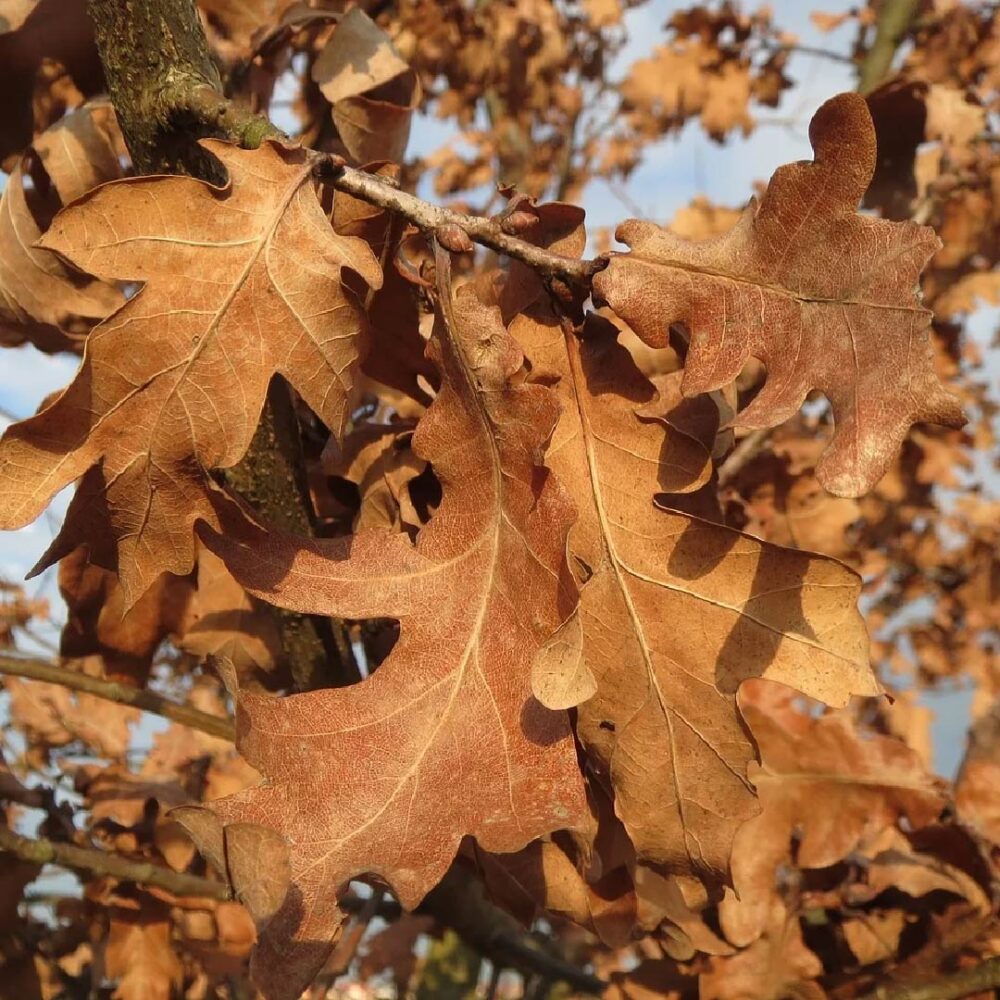
English/Sessile Oak
Also called: common oak, European oak, pedunculate oak (English) | durmast oak (sessile)
Scientific name: Quercus robur (English) | Quercus petraea (sessile)
Estimate full grown height: up to 12 metres (40 ft) (English) | up to 40 metres (131 ft) (sessile)
Preferred habitat: woodlands (English) | riversides, valleys (sessile)
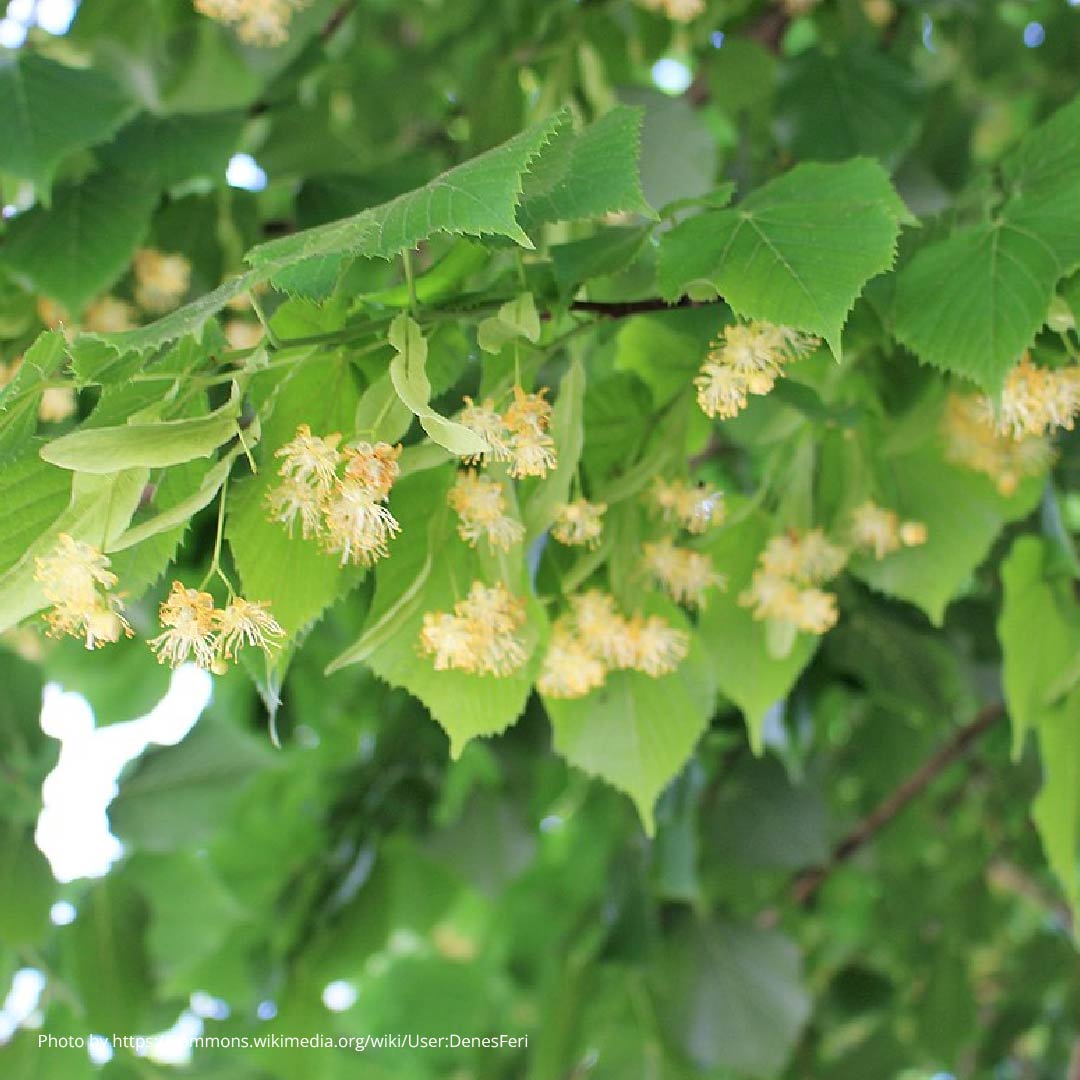
Small-Leaved Lime
Also called: small-leaved linden
Scientific name: Tilia cordata
Estimate full grown height: up to 40 metres (131 ft)
Preferred habitat: woodlands

Wych Elm
Also called: Scots elm
Scientific name: Ulmus glabra
Estimate full grown height: up to 40 m (130 ft)
Preferred habitat: ditches, hilly or rocky woodlands, riversides

Field Maple
Also called: common maple, dog oak, hedge maple
Scientific name: Acer campestre
Estimate full grown height: up to 20 metres (66 ft)
Preferred habitat: chalk lowlands, hedgerows, scrub, woodlands

Hazel
Also called: common hazel
Scientific name: Corylus avellana
Estimate full grown height: up to 12 metres (39 ft)
Preferred habitat: gardens, grassland, woodlands

Common Hawthorn
Also called: one-seed hawthorn, single-seeded hawthorn
Scientific name: Crataegus monogyna
Estimate full grown height: up to 9 metres (30 ft)
Preferred habitat: hedgerows, scrub, woodlands
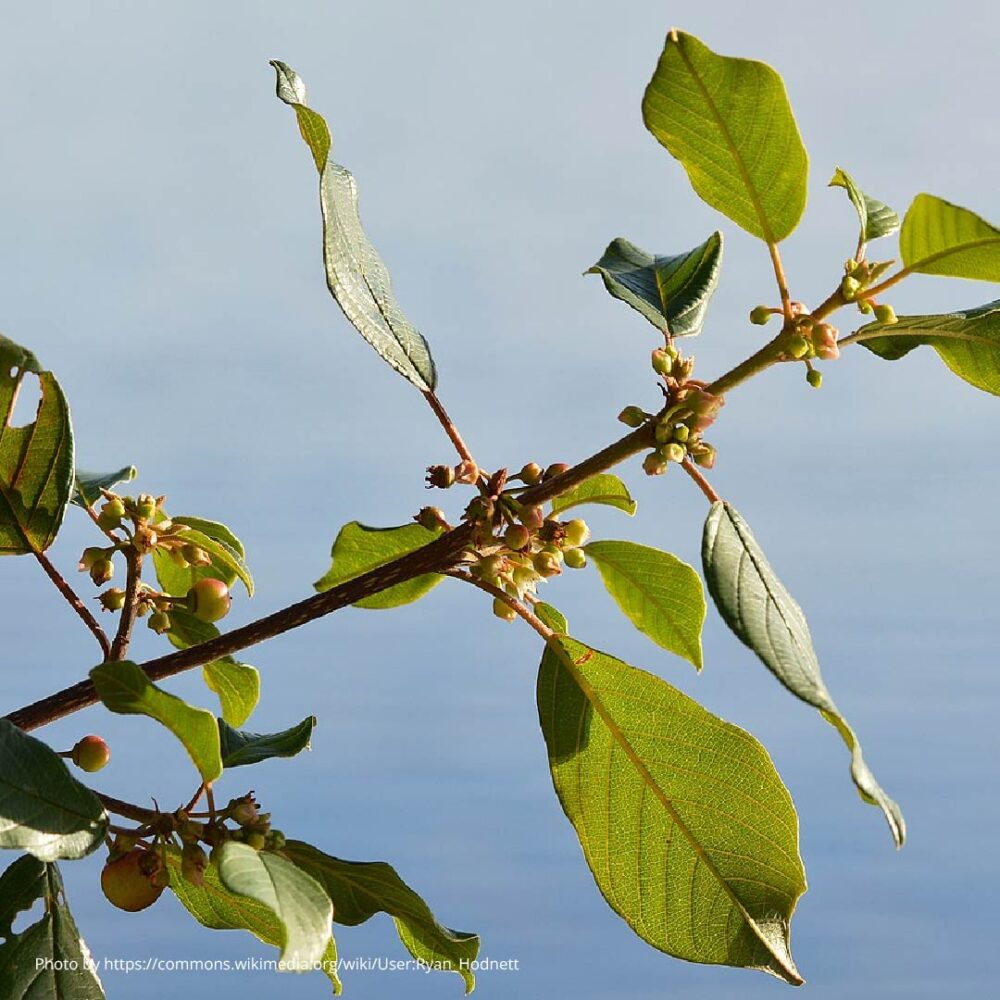
Alder Buckthorn
Also called: breaking buckthorn, glossy buckthorn
Scientific name: Frangula alnus
Estimate full grown height: up to 5 metres (16 ft)
Preferred habitat: bogs, heathland, hedgerows, riversides, open woods, scrub

Common Holly
Also called: Christmas holly, English holly, European holly
Scientific name: Ilex aquifolium
Estimate full grown height: up to 10 metres (33 ft)
Preferred habitat: hedgerows, scrub, woodlands
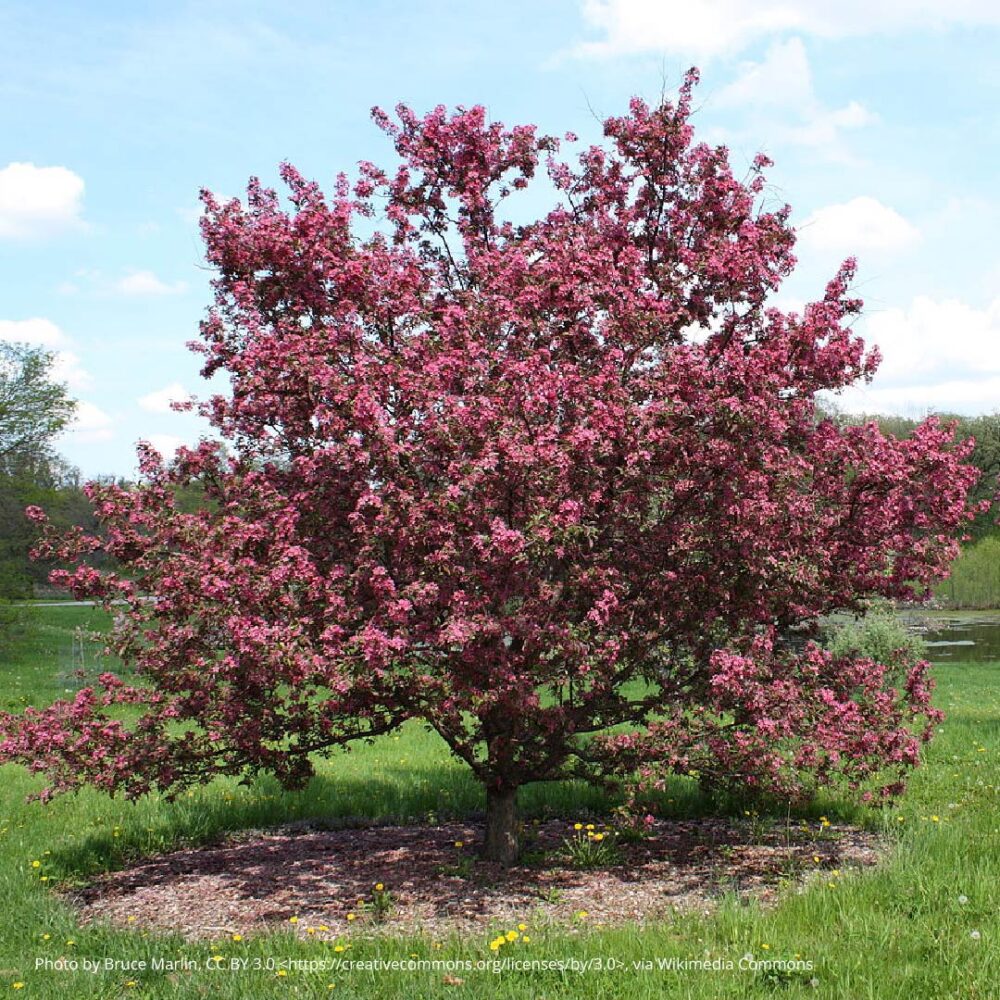
Crab Apple
Also called: wild apple
Scientific name: Malus sylvestris
Estimate full grown height: up to 6 metres (20 ft)
Preferred habitat: hedgerows, woodlands

Wild Cherry
Also called: gean, sweet cherry
Scientific name: Prunus avium
Estimate full grown height: up to 25 metres (82 ft)
Preferred habitat: hedgerows, woodland edges

Blackthorn
Also called: sloe
Scientific name: Prunus spinosa
Estimate full grown height: up to 6 metres (20 ft)
Preferred habitat: copses, hedgerows, scrub, woodlands

Goat Willow
Also called: great sallow, pussy willow
Scientific name: Salix caprea
Estimate full grown height: up to 10 metres (33 ft)
Preferred habitat: ditches, reedbeds, wet woodlands

Rowan
Also called: mountain ash
Scientific name: Sorbus aucuparia
Estimate full grown height: up to 6 metres (20 ft)
Preferred habitat: heathland, mountains, woodland edges
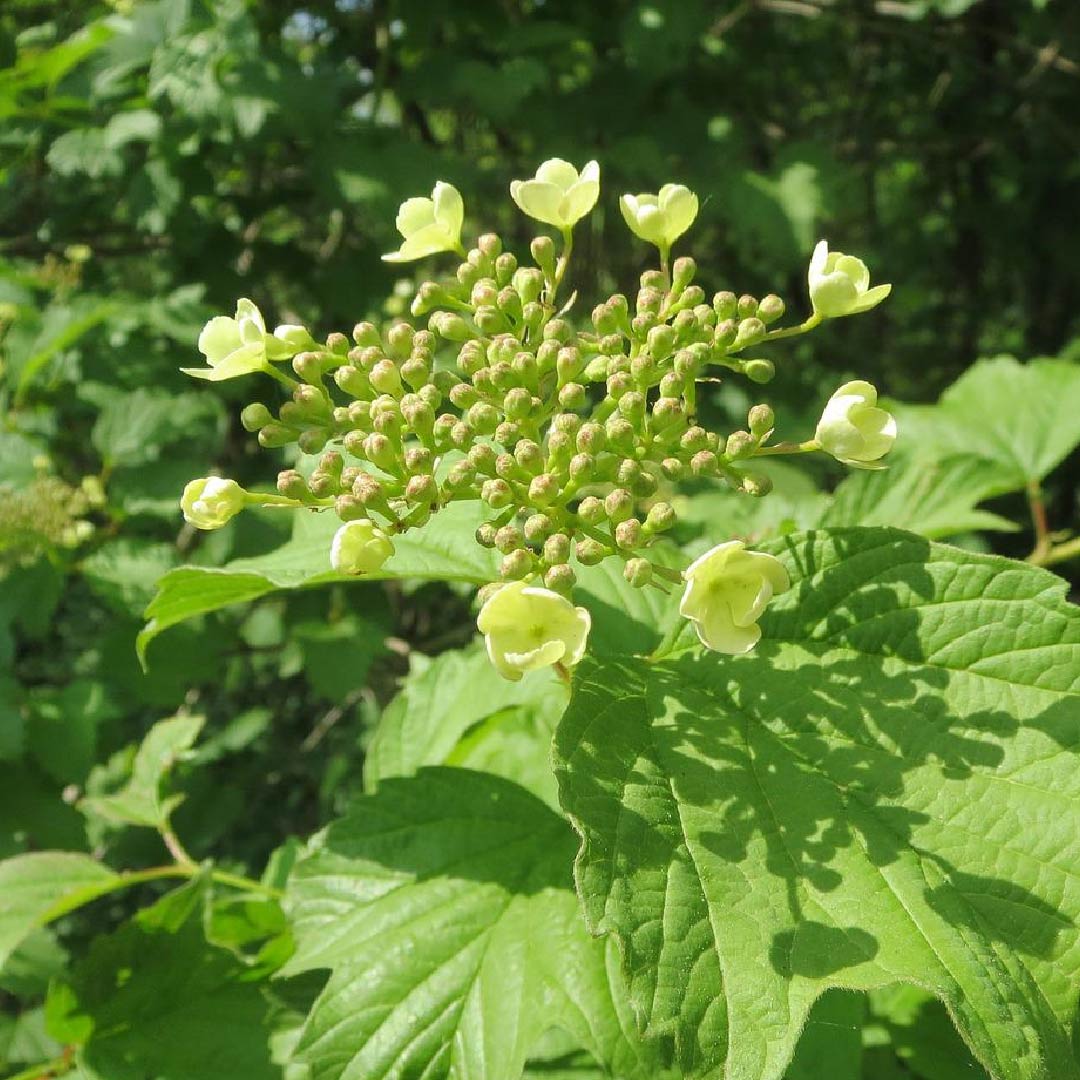
Guelder Rose
Also called: guelder-rose
Scientific name: Viburnum opulus
Estimate full grown height: up to 4 metres (13 ft)
Preferred habitat: fens, hedgerows, riversides, scrub, woodland edges

European Spindle
Also called: common spindle, spindle
Scientific name: Euonymus europaeus
Estimate full grown height: up to 6 metres (20 ft)
Preferred habitat: hedgerows, scrub, woodland edges
Why are we so passionate about the native woodlands when there seem to be a lot of trees in the landscape?

The woodlands we see across the British Isles today are a mixture of ancient woodland, Victorian game plantations, commercial conifers, shelterbelts and farm copses, including a vast range of trees, some native but many not. It is the relative value of different forests for wildlife that we are keen to highlight.
For example, the introduced Spruce and Larch species have 37 and 17 insect species associated with them respectively. In contrast, the native Scots Pine has 91 and in native Oak woodland you have the possibility of finding 284 different insect species scattered over individual oak trees.
A similar search of introduced Horse Chestnut trees would yield only 4 different species, whereas the native birch supports 229. And if you wonder why conservationists are passionate about cutting down rhododendron, it supports zero insects, none.

Of course, insect associations are only one part of the equation. For example, birds such as Siskin, Crossbills and Goldcrests breed mainly in conifers. The small birds living in such woodlands then provide food for predators such as the Sparrowhawk which also prefers to nest in conifers.
But, overall, any native woodland is far, far richer for biodiversity than introduced forest as it has had so much longer for evolution to develop the associations of trees with lichens, insects, molluscs etc.
We have also developed a human association with them, from folk tales, art and poetry, legends to food and herbal remedies. They are part of who we are, and Moor Trees will keep working to retain and enhance that ancient link.
HELP MOOR TREES
BECOME A MEMBER >
MITIGATE YOUR CARBON >
HELP YOUR BUSINESS >
HELP AS A VOLUNTEER >
MAKE A DONATION >